Complex Prompt Structures: Why Role, Context, and Validation Matter
Prompt engineering is no longer about typing a clever sentence into an AI chatbox. Today, high-performing teams use structured prompts with defined roles, clear context, step-by-step instructions, and built-in validation.
Why does this matter? Because AI models like GPT-5, Gemini 2.5, and Claude Opus respond far more consistently when prompts are designed with predictability and reusability in mind. Structured prompts reduce guesswork, save time, and allow you to treat prompts like production code.
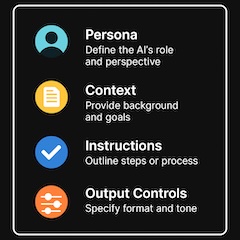
A powerful structure often includes:
- Role — Define the AI’s persona
- Context — Add background, goals, constraints
- Instructions — Break tasks into clear steps
- Output Preferences — Control style, tone, format
- Validation — Ask the AI to fact-check its own output
The trend is clear: structured prompting is becoming the default standard. Developers and startups who adopt these methods now will build stronger, more reliable AI workflows in the future.